
Sugar reduction is not only a matter of replacing sugar with one high-intensity sweetener. In many food and beverage formulations, sugar also contributes mouthfeel, flavor balance, sweetness curve and overall taste experience.
This is why formulators often evaluate sweetener blends instead of relying on a single sweetener. A suitable sweetener blend may help adjust sweetness onset, sweetness duration, aftertaste and taste balance according to the finished product requirement.
This article explains how sweetener blends can be evaluated for sugar reduction projects and how customers can start sample testing before bulk purchasing.
When sugar is reduced, the finished product may lose more than sweetness. The formula may also lose body, smoothness, flavor impact and overall balance. A single sweetener may provide sweetness, but it may not always match the full sensory profile required by the product.
Sweetener blends may be evaluated to combine different sweetener characteristics. For example, one sweetener may provide fast sweetness onset, while another may help improve sweetness duration or taste profile adjustment.
Common sugar reduction challenges:
• Sweetness onset is too fast or too slow
• Sweetness duration does not match the target product
• Aftertaste, bitterness or metallic notes may appear
• Mouthfeel becomes thinner after sugar reduction
• Flavor balance changes after replacing part of the sugar
A good sweetener blend should be evaluated according to the target application, sweetness profile, flavor direction, processing condition and destination market requirements. The purpose is not simply to make the product sweeter, but to build a more suitable taste experience.
In formulation work, sweetener blend evaluation usually focuses on sweetness onset, sweetness peak, sweetness duration, aftertaste control, flavor interaction and cost-in-use.
• Sweetness onset: how quickly sweetness appears after tasting
• Sweetness duration: how long sweetness remains in the mouth
• Aftertaste: whether bitterness, metallic notes or lingering sweetness appears
• Flavor interaction: how the sweetener system works with fruit, dairy, tea, coffee or functional flavors
• Application suitability: how the blend performs in the actual finished product
Different sweeteners have different formulation behavior. The following directions are commonly discussed during sweetener blend evaluation, but the final blend ratio and dosage should always be confirmed through application testing.
Sucralose + Acesulfame Potassium:
Often evaluated in beverage, candy and powder drink systems where clean sweetness, fast sweetness onset and sugar reduction support are required.
Thaumatin + Other Sweeteners:
May be considered when sweetness enhancement, flavor modification or taste profile adjustment is needed in selected formulations.
Neotame / Advantame Based Systems:
Can be evaluated for low use-level sweetness contribution and sweetener blend development, depending on application and destination market requirements.
Stevia-Based Blends:
May be evaluated for plant-derived positioning, often together with other sweeteners or taste modifiers to improve sweetness profile.
Polyol + High-Intensity Sweetener Systems:
Can be considered when both sweetness and body are important, such as in selected confectionery, powder or reduced-sugar formulations.
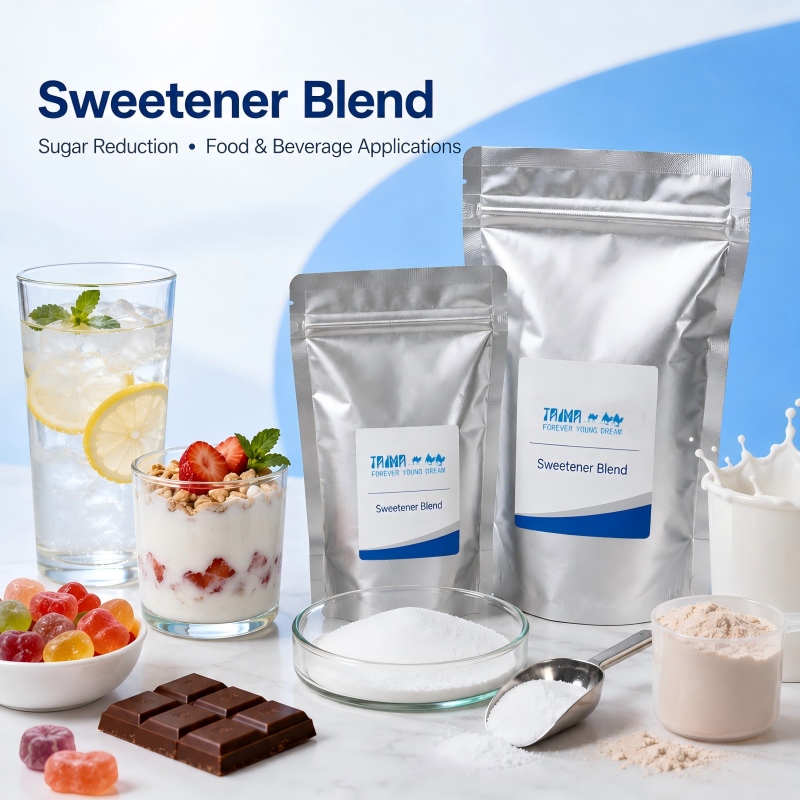
Sweetener blends should be evaluated according to the finished product type. A blend that works well in a beverage may not perform the same way in candy, dairy, powder drink or functional food systems.
Beverages: focus on solubility, acidity compatibility, sweetness curve and aftertaste control.
Confectionery: focus on sweetness duration, processing stability, flavor release and mouthfeel.
Powder Drinks: focus on dry blending, dissolution, sweetness balance and flavor distribution.
Dairy Products: focus on smoothness, milk flavor compatibility and sweetness balance.
Functional Foods: focus on masking off-notes from vitamins, minerals, proteins or botanical extracts.
Before bulk purchasing, customers are encouraged to test sweetener blend options in the actual formulation. This helps confirm whether the sweetness profile, dosage, flavor interaction and processing performance match the target product.
To support evaluation more efficiently, customers can share the following project information when requesting samples or discussing a sweetener blend direction.
• Application, such as beverage, candy, dairy, powder drink or functional food
• Target sweetness profile, such as clean sweetness, fast onset or longer sweetness duration
• Sugar reduction target or current sugar level
• Current sweetener system if available
• Flavor direction and aftertaste concerns
• Sample quantity and estimated bulk quantity
• Destination country and required documents
TAIMA supports Sweetener Blend for Sugar Reduction evaluation discussions for food and beverage formulation projects.
Customers can discuss suitable sweetener blend directions according to application, target sweetness profile, sugar reduction goal and required documents.
For individual sweetener evaluation, customers may also compare Thaumatin E957, Advantame E969, Neotame E961, Acesulfame Potassium E950, Sucralose E955 and other sweetener options according to formulation requirements.
Samples, COA, SDS and specification can be discussed according to selected sweetener options, product availability, batch, quantity and destination country.
Final blend ratio, dosage, taste performance, labeling and regulatory suitability should be confirmed through customer-side formulation testing and destination market review.
A sweetener blend may help adjust sweetness onset, sweetness duration, aftertaste and overall taste balance. In many reduced-sugar formulations, one sweetener may not provide the full target sensory profile.
This depends on the application, sugar reduction target, formulation base and destination market requirements. In many cases, sugar reduction requires sweetener blend evaluation and application testing rather than simple one-to-one replacement.
Sweetener blend evaluation may involve sucralose, acesulfame potassium, thaumatin, advantame, neotame, stevia sweetener systems, polyols or other ingredients depending on the formulation goal.
Blend ratio should be discussed according to the application, sweetness target, flavor system, cost-in-use and regulatory requirements. Final ratio and performance should be confirmed through application testing.
Please share your application, target sweetness profile, sugar reduction target, current sweetener system, sample quantity, estimated bulk quantity, destination country and required documents.
Need sweetener blend samples for sugar reduction formulation testing?
Please send us your application, target sweetness profile, sugar reduction target, current sweetener system, sample quantity, estimated bulk quantity, destination country and required documents. TAIMA can help discuss suitable sweetener blend options and provide sample support for formulation evaluation.
Contact us for price, sample, MOQ and OEM support.
✔ Reply within 12 hours
Get Quote on WhatsApp Request SampleWhatsApp: +86 15619038117
Email: alina@taimacn.com
 Alina
Alina